.svg)
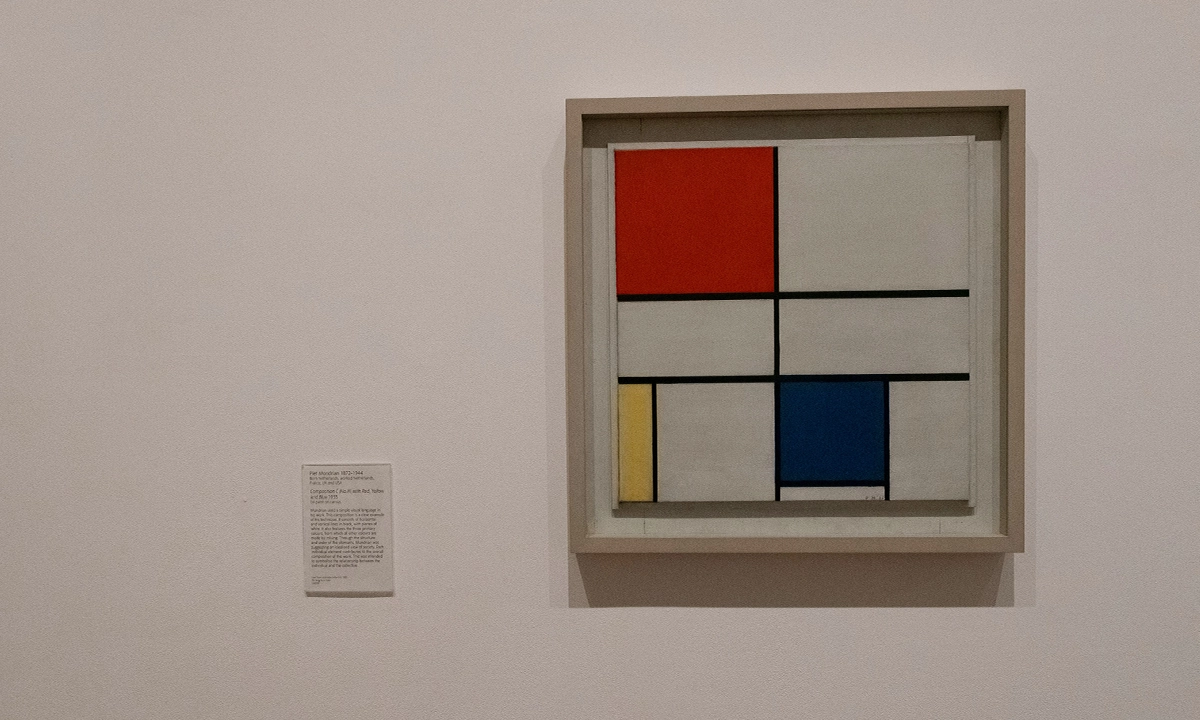
Most people don’t begin collecting art with a defined identity in mind. They begin with a reaction—something that resonates, even if they can’t fully explain why. That initial response is often more important than any long-term plan, because it reflects how the work will actually be experienced over time.
A collection doesn’t start as a system. It starts as a series of decisions.
How do you build an art collection that reflects who you are?
By choosing work based on connection and allowing patterns, preferences, and perspective to emerge over time rather than forcing structure from the beginning.
As pieces accumulate, something begins to take shape. Certain tones, subjects,o r approaches appear more frequently. There is a subtle alignment between the work, even when it wasn’t intentional. This is where identity begins to surface, not as something imposed, but as something revealed.
The collection becomes a reflection of attention.
There is also a shift that happens from acquiring to curating. Early on, the focus is often on individual pieces. Over time, the focus expands to how those pieces relate to one another. Placement, spacing, and sequence begin to matter.T he collection is no longer just a set of works, it becomes a composition initself.
That composition carries a point of view.
Consistency does not mean uniformity. A strong collection can holdc ontrast, variation, and even tension between pieces. What connects the work is not similarity, but coherence at a deeper level, an underlying sensibility that ties everything together.
That sensibility is what makes a collection feel personal rather than assembled.
Does an art collection need a theme to feel cohesive?
No. Cohesion often emerges naturally through repeated choices and preferencesr ather than a predefined theme.
Environment also plays a role in shaping a collection. The space in which the work lives influences how it is experienced and how new pieces are selected. Light, architecture, and layout all contribute to how the collection evolves. As the environment changes, the collection adapts.
It remains dynamic.
There is also value in understanding the origin of the work. Knowing the artist, the process, and the intention behind a piece adds depth to the collection. It connects individual works to a broader narrative, reinforcing their place within something larger than the immediate visual.
This context strengthens the relationship between the collector and the work.
Why does knowing the artist matter when building a collection?
Because it connects each piece to a larger body of work and intention, adding depth and continuity to the collection.
Over time, certain pieces will remain central while others may shift orl eave entirely. This is part of the process. A collection is not fixed; it evolves as perspective changes. What once felt essential may feel less relevant later, and new work may take its place.
That evolution is not a flaw. It is a sign that the collection is active.
The most compelling collections are not built to impress, they are built to reflect. They hold decisions, experiences, and moments of recognition that accumulate over time. They are less about completeness and more about continuity. They remain open.
There is no final state where a collection is finished. It continues to develop as long as attention is given to it. Each new piece is not just an addition, but a continuation of an ongoing conversation between the work and the person collecting it.
In that sense, a collection is not just something you build.
It is something that builds alongside you.
Part of an ongoing journal exploring collecting, identity, and how artreflects the way we see and experience the world.