.svg)
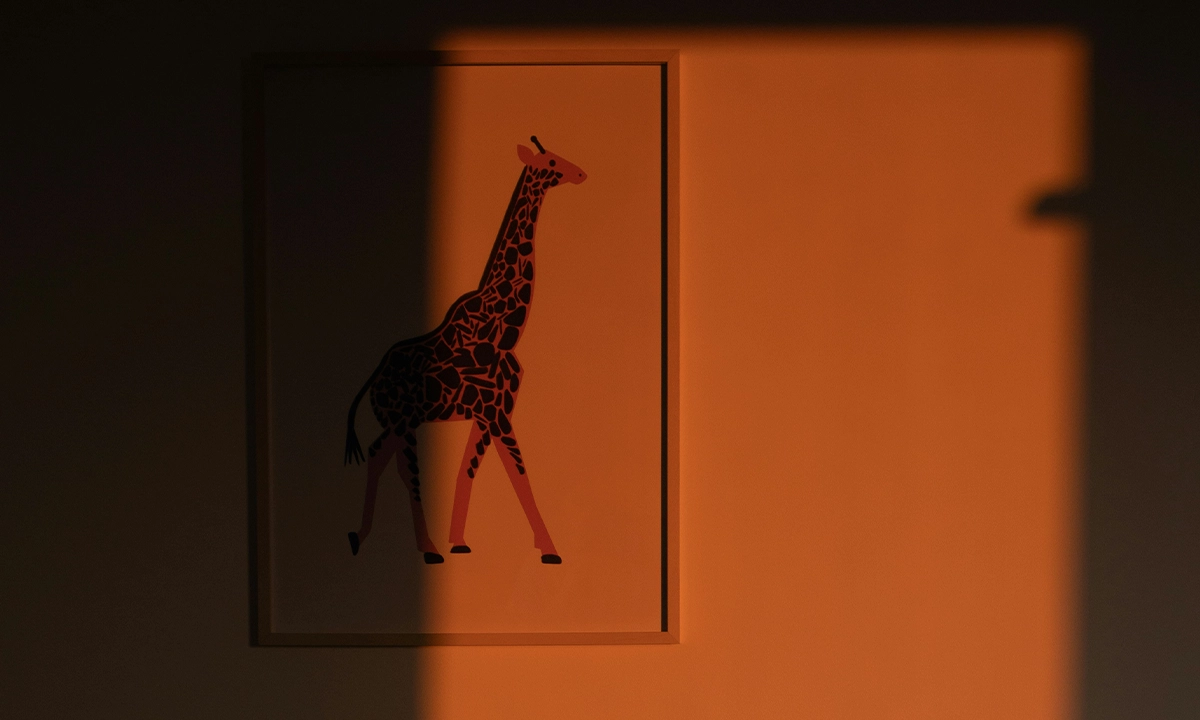
There is a moment in most spaces where everything appears to be in place, yet something feels unresolved. The furniture is arranged, the lighting is considered, and the palette is cohesive, but the room lacks a sense offinality. It feels assembled rather than complete.
That difference often comes down to the absence of art.
Why does a room feel unfinished without art?
Because art introduces focal point, emotional depth, and visual anchoring—elements that complete a space beyond functional design.
Furniture defines how a space is used, but art defines how it feels. Without it, a room can read as purely functional or stylistic, lacking the layer that brings depth and personality. Art introduces tension, contrast, and narrative. It gives the eye a place to settle and the space a point of reference.
This is what transforms a room from staged to lived-in.
The right artwork doesn’t necessarily match the room. In many cases, it shouldn’t. Instead, it creates balance through contrast or alignment at a deeper level—tone, mood, or emotional weight. When this balance is achieved,the space begins to feel cohesive in a way that goes beyond visual coordination.
It feels resolved.
Scale plays a critical role in this transformation. A piece that is too small can feel disconnected, while one that is too large can dominate rather than integrate. When scale is considered carefully, the artwork anchors the wall inproportion to the architecture, creating a sense of stability within the space.
This is where art begins to function structurally rather than decoratively.
What role does scale play in completing a room?
Proper scale allows artwork to anchor a space, creating balance and proportion that connects the room’s elements into a cohesive whole.
Material presence also contributes to this effect. The surface of the work, the way it interacts with light, and the quality of its production all influence how it sits within the environment. A well-made piece holds its position quietly but confidently, reinforcing the room rather than competing with it.
This kind of presence cannot be replicated through mass-produced décor.
There is also an emotional dimension to completion. A room without art can feel neutral, even when it is visually appealing. Art introduces perspective. It suggests intention. It reflects the person living within the space rather than just the design choices they’ve made.
That shift is subtle, but it changes how the room is experienced.
How does art change the feeling of a room?
It introduces emotion, narrative, and personal perspective, turning a designed space into a lived environment.
Over time, the artwork becomes a point of continuity within the room. Other elements may change—furniture, color, layout—but the piece remains, adapting to those shifts while maintaining its presence. This stability is part of what makes a room feel grounded.
Completion, in this sense, is not about perfection. It is about alignment.
The right artwork doesn’t just finish a room visually. It finishes it conceptually. It closes the gap between design and experience, between structure and feeling. It turns a space into something that not only looks considered, but feels complete.
That is what gives a room its sense of permanence.
Part of an ongoing journal exploring space, presence, and how art shapes theenvironments we live in.