.svg)

What does authenticity mean in the age of AI art?
Authenticity increasingly refers to authorship, intention, and traceable human involvement rather than technical uniqueness alone.
Collectors are not necessarily rejecting AI outright. What they are doing, however, is looking more closely at context. They want to understand the artist’s relationship to the work, not just the final image. Was the piece shaped by lived experience? Did it evolve through decision-making and revision? Does it sit within a coherent body of work?
In other words, collectors are looking beyond aesthetics and toward lineage.
Lineage has become one of the clearest markers of authenticity. A single compelling image is no longer enough. Serious collectors are asking whether the work reflects a sustained practice. Does it connect to previous pieces? Does it reveal a consistent point of view? Can you trace the artist’s thinking across time?
AI can generate images. It cannot generate continuity.
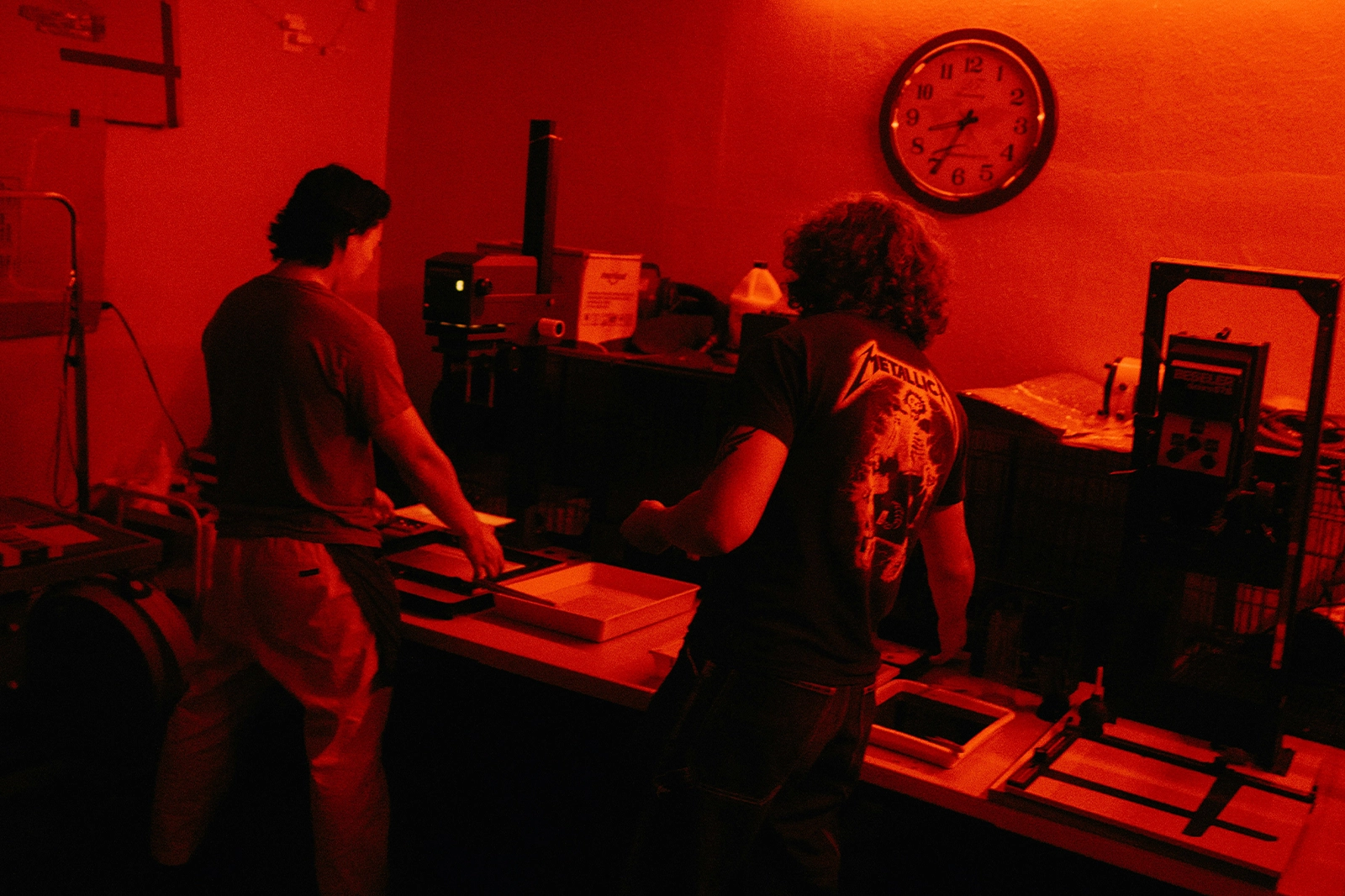
This is why process has re-entered the conversation in a deeper way. Not as spectacle, but as structure. Collectors are increasingly interested in how work is made—not out of curiosity, but out of discernment. Process provides context. It anchors the work in something more stable than trend or output.
That doesn’t mean every collector needs to see a studio or understand every material choice. It means they want to know that the work passed through intention rather than automation alone.
Why are collectors paying more attention to process now?
Because process signals accountability, commitment, and human authorship—qualities that are harder to simulate convincingly over time.
Scarcity has also taken on new meaning. In a world where images can be generated endlessly, uniqueness no longer guarantees value.Instead, collectors are focusing on bounded work—limited editions, clearly defined bodies of work, and pieces that carry a documented origin.
The distinction is subtle but important. Scarcity driven by artificial limitation feels different from scarcity rooted in material or conceptual constraint. Collectors can sense the difference. One is marketing. The other is structure.
Another shift happening quietly is emotional. Collectors want to feel connected to the person behind the work. As AI tools proliferate, human presence becomes a differentiator. The story behind the piece, the geography of where it was made, the evolution of the artist’s practice—all of these factors now carry more weight than they did even a few years ago.
Authenticity, in this sense, is relational.
It’s less about proving originality in a legal sense and more about establishing trust in a human one.
This doesn’t mean AI-assisted work has no place in serious collections. But it does mean that collectors are asking more nuanced questions. Who made the decisions? What was chosen intentionally versus generated automatically? How does this work sit within a broader artistic arc?
These are not hostile questions. They’re thoughtful ones. And they reflect a maturation of the collecting landscape rather than a reactionary fear of technology.
How can collectors evaluate authenticity in contemporary art?
By looking for traceable authorship, continuity of practice, intentional limitation, and a clear relationship between the artist and the finished work.
Ultimately, authenticity after AI is less about medium and more about meaning. Collectors are gravitating toward work that feels anchored—anchored in process, in place, in a body of work that extends beyond a single image.
In an era defined by speed and replication, the presence of a human mind moving deliberately through decisions has become visible again.Not louder, but clearer.
And clarity, more than novelty, is what serious collectors are beginning to value.