.svg)
Film grain is rarely neutral. People either love it or try to eliminate it. In a world trained to equate technical perfection with quality, grain is often framed as something to correct—an artifact of older technology, a limitation best left behind.
But grain has never been accidental in the way people assume. It is not simply a byproduct of film. It is part of how analog photography speaks.
What is film grain actually communicating?
Film grain communicates texture, atmosphere, and time—embedding a photograph with physical presence and emotional weight rather than visual precision alone.
Unlike digital noise, which appears when a system struggles to maintain clarity, film grain is inherent to the medium itself. It is the visible interaction between light and material. Silver halide crystals react, cluster, and disperse in ways that cannot be perfectly controlled. That variability introduces character.
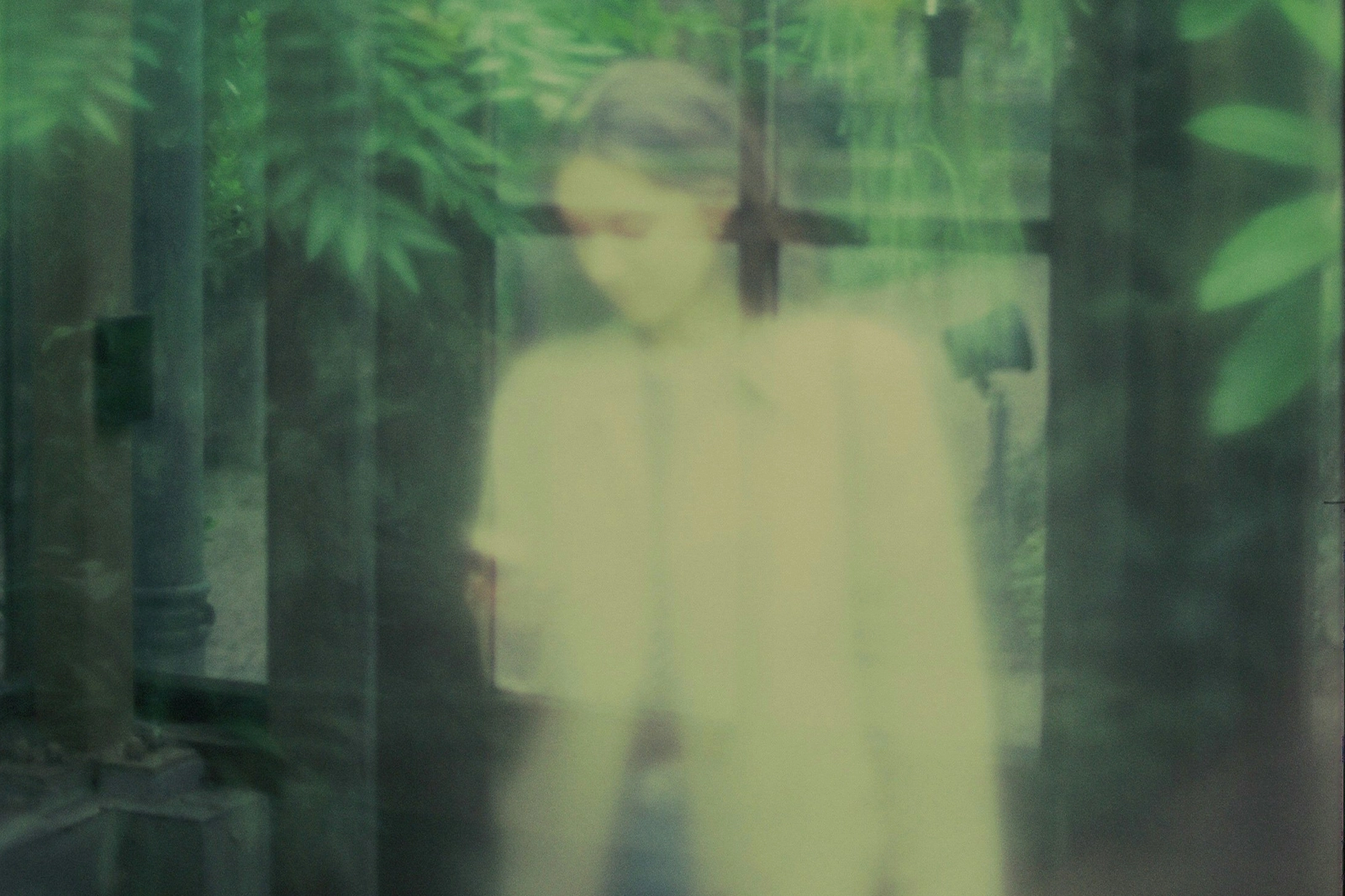
What grain communicates first is presence. The image doesn’t feel sealed or flattened. It feels porous. Light seems to live inside it rather than sit on top of it. The photograph breathes.
That breathing room changes how the image is received. Sharp edges soften. Transitions become gradual. The eye moves differently. Instead of scanning for detail, the viewer settles into tone, mood, and rhythm.
Film grain also carries time in a way digital images struggle to emulate.It doesn’t freeze a moment so much as hold it. Grain suggests duration—the accumulation of exposure, the passing of light across a surface.It feels closer to memory than documentation.
That’s why grain is often associated with nostalgia, even when the image itself isn’t historical. The association isn’t about the past; it’s about how memory behaves. Memory isn’t sharp. It’s layered, textured, incomplete. Grain mirrors that psychology.

Why does film grain feel emotional rather than technical?
Because grain mimics the way memory and perception actually work—soft, layered, and shaped by time rather than precision.
Digital perfection, by contrast, prioritizes control. Clean lines.Infinite correction. The removal of friction. While that clarity has its place, it often produces images that feel resolved too quickly. There’s nothing left to enter. Nothing left to interpret.
Grain resists that finality. It leaves space.
That space is where meaning settles.
Another thing grain communicates is authorship. Film grain is never identical from one frame to the next. Even images shot seconds apart carry subtle differences. Those variations remind the viewer that the image passed through a physical process—one influenced by environment, chemistry, choice, and chance.
Perfection suggests automation. Variation suggests presence.
And in a visual landscape increasingly filled with images that are endlessly repeatable, that presence stands out.
How does grain signal human authorship?
Grain introduces unpredictability and variation, signaling that the image passed through physical process and human decision-making rather than automated optimization.
Grain also slows the viewer down. It discourages pixel-level inspection and invites a more holistic kind of looking. You don’t analyze grain; you experience it. It’s felt before it’s understood.
That slowness aligns with how analog photography functions overall. Fewer images. More intention. A deeper relationship between seeing and choosing.
For collectors, this matters. Grain-rich photographs tend to age differently. They don’t chase clarity trends that shift every few years.Instead, they hold onto atmosphere. They remain legible even as technical standards change.
Film grain doesn’t compete with digital perfection. It operates alongside it, offering a different kind of visual language—one rooted in materiality rather than optimization. In an era defined by speed, sharpness, and abundance, grain quietly reintroduces texture, ambiguity, and restraint.
It reminds us that images don’t need to be perfect to be complete.
Sometimes, they just need to feel human.
Part of an ongoing journal exploring authorship, process, and the role of human-made art in an increasingly automated visual world.