.svg)
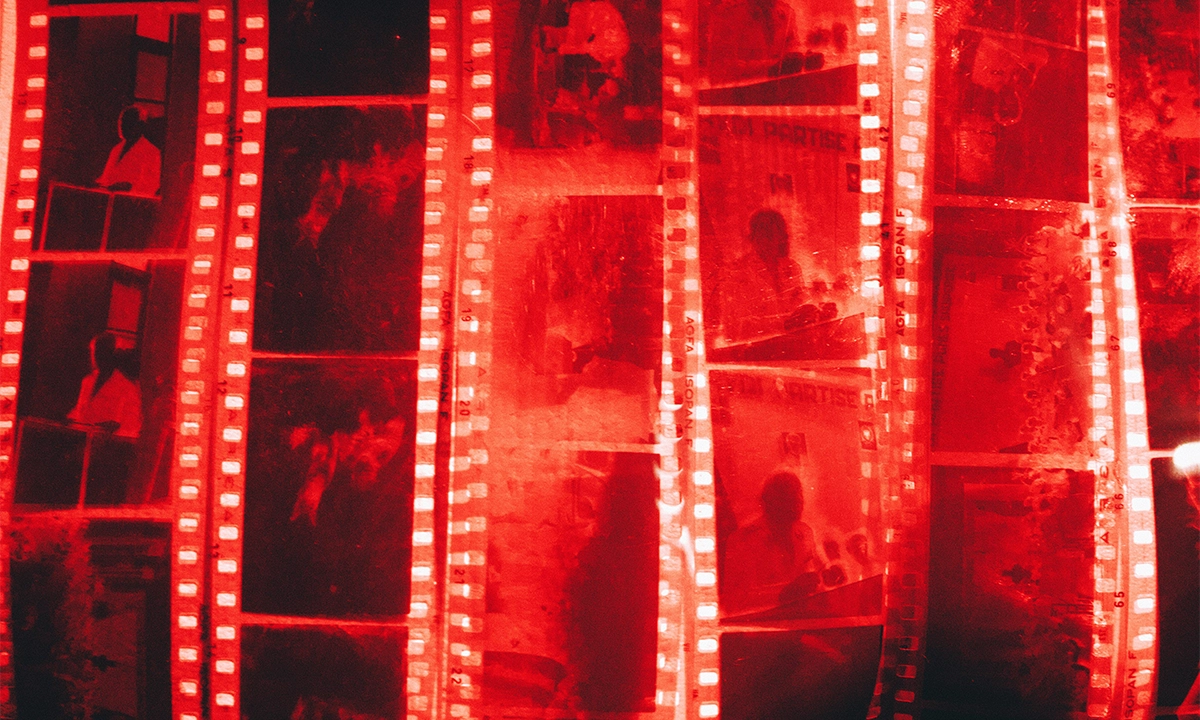
Analog photography has outlived more than one prediction of its disappearance. Each time technology accelerates, film is framed as obsolete—too slow, too manual, too inefficient for a modern image culture built on speed.And yet it remains. Not loudly. Not competitively. Simply present.
What keeps analog photography relevant isn’t resistance to technology. It’s the fact that it operates according to a fundamentally different logic.
Why does analog photography still matter today?
Analog photography matters because it embeds time, limitation, and physical consequence into the act of seeing—qualities that cannot be replicated by automated or generative systems.
Film demands commitment before certainty. You choose the frame without knowing exactly how it will resolve. Light is measured, not previewed. Each exposure costs something. These constraints don’t limit creativity; they shape it. They force attention, patience, and presence long before the image exists.
That presence is felt in the final work. Not as a technical artifact, but as a kind of quiet gravity. Film images tend to unfold slowly. They don’t exhaust themselves on first glance. There’s room for ambiguity, for softness, for imperfection that feels intentional rather than corrected.
In contrast, AI-generated images arrive fully formed. They are immediate and optimized, often impressive at first glance but strangely weightless overtime. They haven’t passed through a moment of uncertainty. They haven’t risked failure. They haven’t waited.
Analog photography also preserves a direct relationship between the photographer and the physical world. Light touches film. Chemicals react. Paper absorbs. Every step leaves evidence. There is no separation between the act of seeing and the act of making; they are bound together by process.
This matters more now than it did before. In a culture saturated with images that have no origin in lived experience, photographs that begin with real light and real places carry a different kind of credibility. They don’t announce themselves as authentic. They simply are.

How does physical process affect the meaning of a photograph?
Physical process introduces consequence and irreversibility, allowing photographs to carry traces of time, environment, and decision-making thatdeepen emotional resonance.
Another reason analog photography continues to matter is its relationship to restraint. Film encourages fewer images, not more. Each frame requires intention. This economy of choice leads to a different kind of editing—not after the fact, but before the shutter is released.
That discipline changes how photographers see. It slows perception. It sharpens awareness. And over time, it builds a consistent point of view rather than a collection of outputs.
Consistency, not volume, is what gives work longevity.
In an AI-generated image economy, where visual abundance is infinite, analog photography quietly reintroduces scarcity—not as a marketing tactic, but as a natural result of process. There are fewer images because there must be.That limitation gives each photograph more space to matter.
For collectors, this distinction is increasingly important. Film-based work carries a clear lineage: place, time, material, and authorship are all legible. The image is not just seen; it is located.
Why are collectors still drawn to analog photography?
Because analog photographs offer traceable authorship, material presence, and a slower relationship to looking—qualities that feel grounding in an automated image culture.
None of this suggests that analog photography is superior to all other forms of image-making. What it offers instead is clarity. It makes visible the difference between images that are generated and images that are lived with. Between speed and consideration. Between abundance and intention.
As AI-generated visuals continue to multiply, analog photography doesn’t need to compete. It exists as a counterweight—quiet, physical, and deliberate.And in that steadiness, it continues to matter.
Part of an ongoing journal exploring authorship, process, and the role of human-made art in an increasingly automated visual world.