.svg)
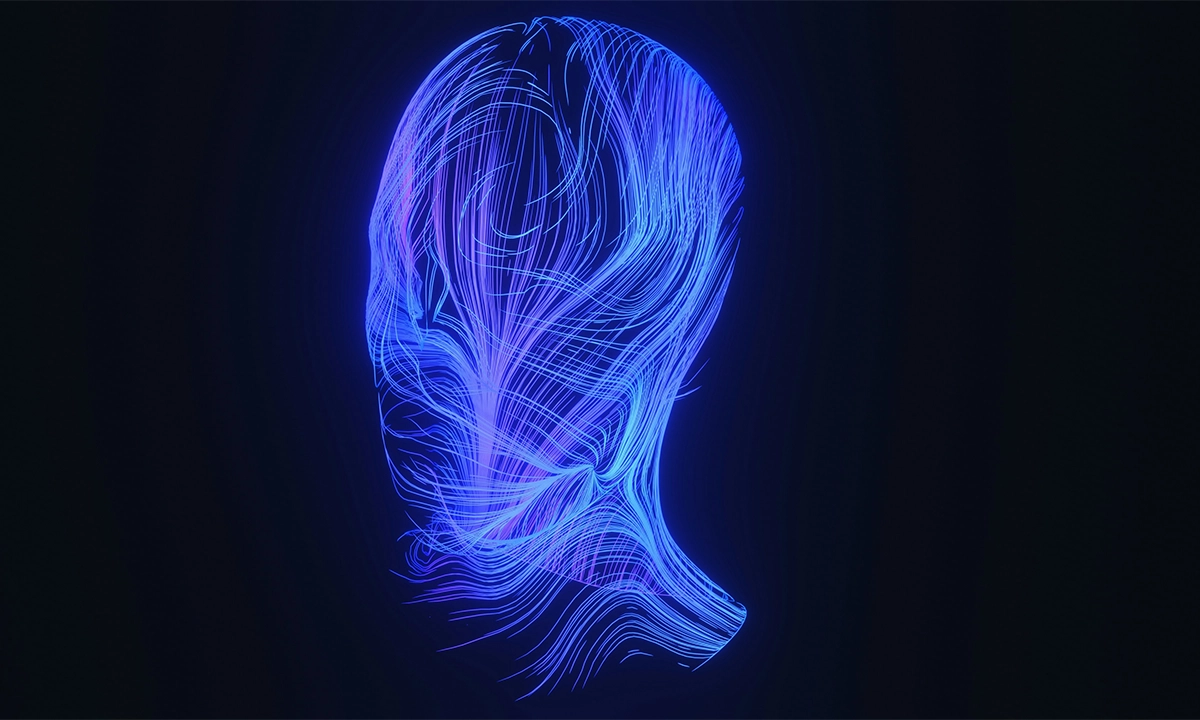
Luxury used to be easy to spot. It was louder, shinier, and often defined by scale—more detail, more polish, more production. But as automation reshapes how images are made and distributed, those signals are losing their weight.What once felt rare is now abundant. What once required time now happens instantly.
In that shift, something unexpected is happening. Human-made art is becoming a different kind of luxury—not because it’s expensive or exclusive, but because it’s increasingly uncommon.
What does luxury mean in the context of art today?
Luxury in contemporary art is less about status or excess and more about intention, authorship, and the presence of human decision-making in a world dominated by automation.
When images can be generated endlessly, effort stops being visible. Speed replaces deliberation. Outcomes appear without evidence of the journey behind them. In that environment, work that clearly carries time, risk, and decision-making stands apart. Not loudly, but unmistakably.
Human-made art is slower by nature. It requires attention—both from the person making it and from the person encountering it. That slowness isn’t inefficiency; it’s investment. It signals that something was considered rather than optimized.
This is where the idea of luxury begins to shift.
Traditionally, luxury implied refinement through repetition: perfected processes, polished outputs, predictable results. But automation now delivers those qualities effortlessly. What it cannot deliver is restraint. It cannot choose not to produce. It cannot decide when enough is enough.
Artists do.
That choice—to stop, to edit, to leave something unresolved—is one of the clearest markers of human authorship. And it’s becoming more legible as automated imagery floods the visual landscape.
Why is restraint becoming a marker of value in art?
Because restraint reflects judgment, intention, and confidence—qualities that automated systems do not possess or prioritize.
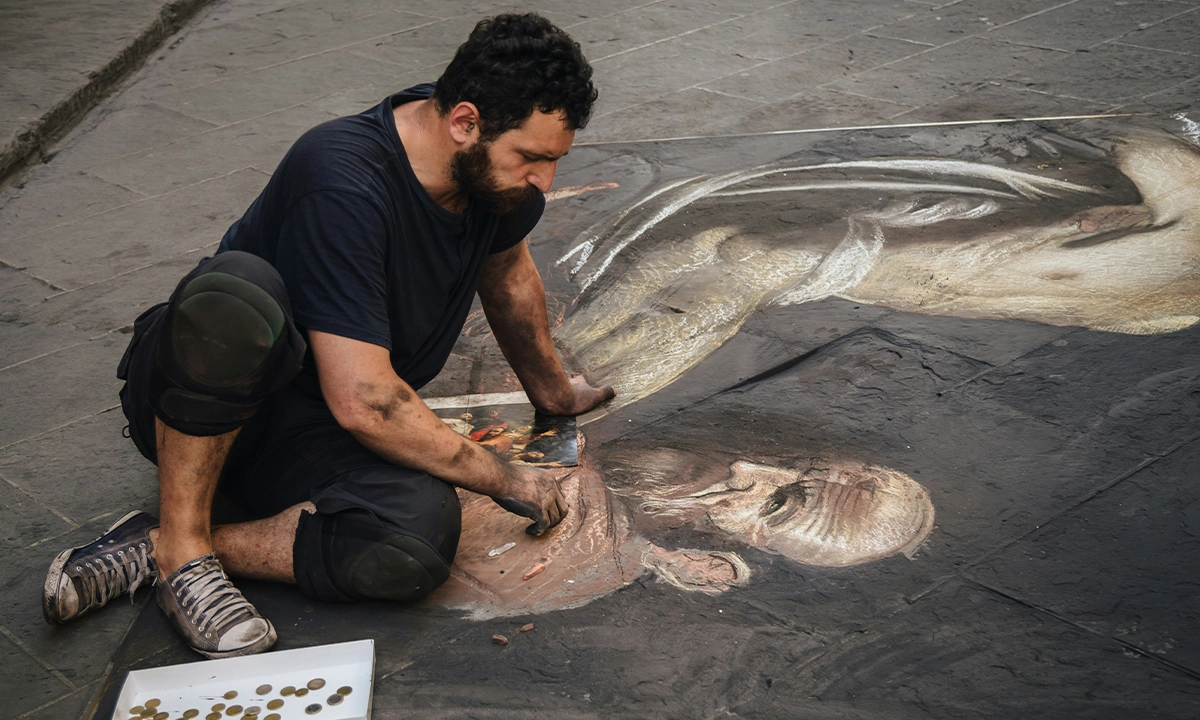
Another reason human-made art reads as luxury today is its relationship to process. Physical processes introduce limitation. Film runs out. Paper absorbs differently each time. Ink behaves unpredictably. These constraints require responsiveness rather than control.
Automation removes those boundaries. It promises infinite variation without consequence. But consequence is where meaning forms. When decisions cost something—time, materials, effort—they carry weight. That weight is perceptible, even if it’s difficult to articulate.
Collectors feel it.
Luxury also implies trust. Trust that something was made for a reason, not simply because it could be made. Trust that the work belongs to a larger practice, a point of view, a way of seeing that extends beyond a single image.
Human-made art offers continuity. There is a through line—across pieces, across years—that signals care rather than output. Automated images exist in isolation. They don’t accumulate history. They don’t evolve with their maker.
That continuity is becoming one of the most valuable qualities art can hold.
Why does human-made art feel more trustworthy to collectors?
Because it reflects authorship, continuity, and accountability—qualities rooted in human practice rather than automated generation.
None of this suggests that technology has no place in creative culture. But the presence of automation has clarified something important: luxury is no longer about having more. It’s about choosing less, with intention.
In that sense, human-made art doesn’t compete with automated imagery. It operates on a different axis entirely. One prioritizes scale. The other prioritizes meaning.
As automation accelerates, that difference becomes easier to recognize.And work that once felt understated begins to read as deliberate. Work that takes its time begins to feel rare.
That’s the new signal. Not excess. Not polish. Presence.
Note: Part of an ongoing journal exploring authorship, process, and the role of human-made art in an increasingly automated visual world.